

What’s the Catch?
The Honest Truth About Points and Credit Cards
Who it’s for: anyone thinking about getting a credit card for points.
By the end, you’ll know
- What the catch really is, and why interest matters
- How welcome bonuses work
- What a card does to your credit
- When an annual fee makes sense
- Whether to start now or wait
So, what's the catch?
You’ve picked a trip, and now someone tells you to just get a credit card, usually like it’s the easiest thing in the world. Your gut says there has to be a catch.
You’re right, there is one. The catch isn’t the points. It’s what happens if earning them changes how you spend or leaves you paying interest.
Once you know that, you can decide whether a card makes sense for you yet.
Why banks give you points
Banks don’t hand out points to be nice.
Every time you pay with a credit card, the store pays a processing fee, and part of that goes to the bank that issued your card.
Banks also earn money from annual fees and from people who carry a balance. Points are how a bank gets you to reach for its card instead of someone else’s, and they’re only a bonus if you’re not the one paying interest.
Welcome bonuses
Many cards offer a welcome bonus, also called a sign up bonus. Spend a set amount on your new card within a set time after opening it, and if you meet the offer’s terms, you earn a big batch of points early on.

That offer can change, and every so often a bank raises it above the usual offer for a limited time. We track the usual welcome bonus for the cards we cover and flag it on each card’s page when we spot a current offer that beats it. The standout jumps become alerts, and How to Spot an Elevated Welcome Offer walks you through what to look for.
The spending requirement is where people can get into trouble. Only consider a card if your normal spending would get you there. Buying extra just to hit the number can cost more than the bonus is worth, especially if it leaves you with a balance you can’t pay off in full.
The real catch is interest
If you pay your full statement balance by the due date, you generally won’t be charged interest on your purchases. If you carry a balance from one month to the next, you’re usually charged interest on that balance, and you can lose the interest free window on new purchases too, so they can start collecting interest right away. At typical card interest rates, that can quickly outweigh what your points are worth.
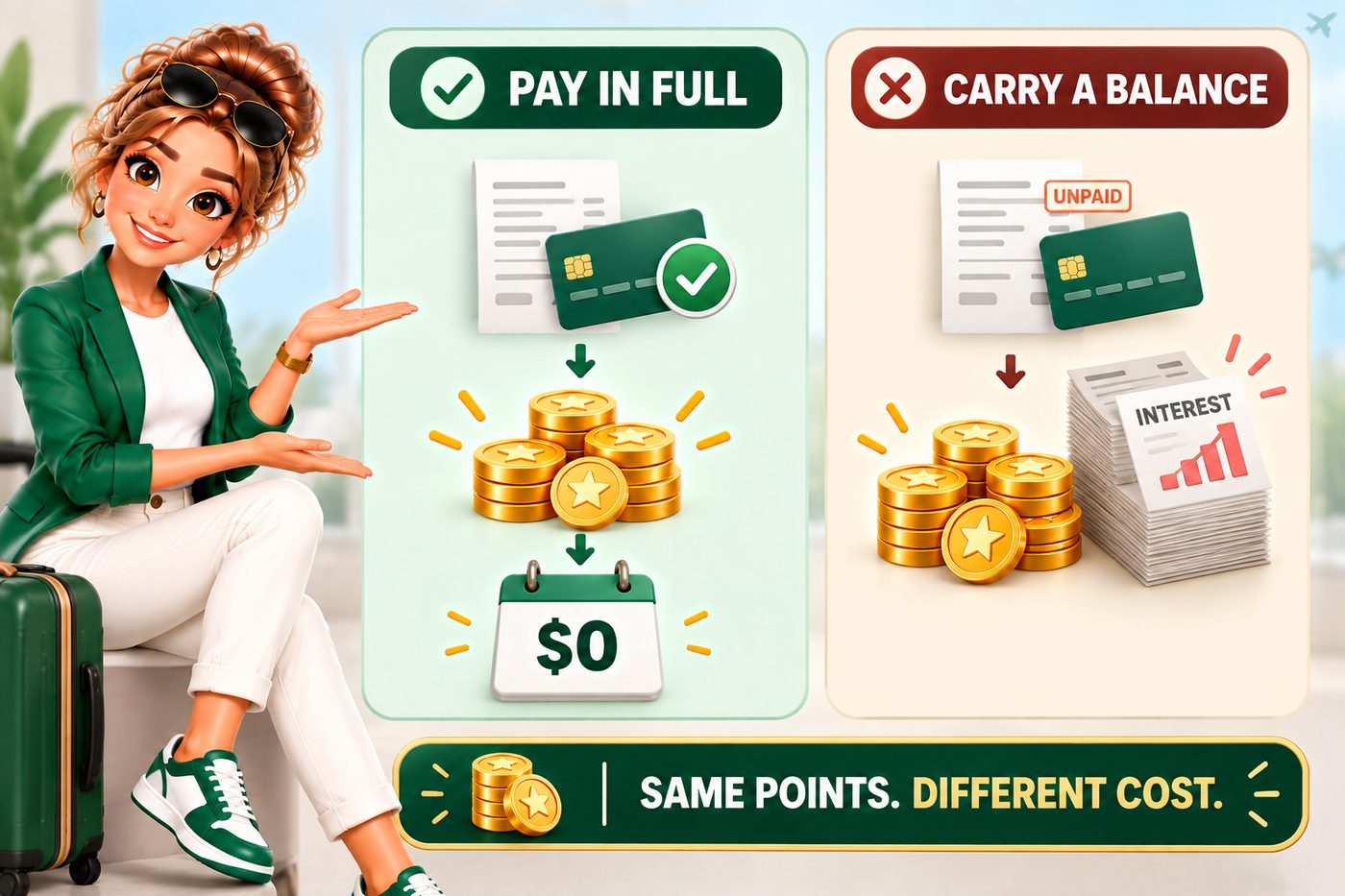
Quick clarification: paying in full generally means paying the balance on your statement by its due date. Newer purchases may still show in your current balance, because they belong to the next statement.

Watch out
Pay in full, or skip the points for now
Credit card interest can cost more than your points are worth.
If you’re paying interest to earn points, the bank is winning this game.
What happens to your credit
When you apply for a card, the bank checks your credit, and that usually counts as a hard inquiry. It can lower your score a little for a while.
Checking your own score or report doesn’t lower it, so look whenever you want. Many credit card companies show your score for free on your statement or in your online account. You can also get your credit reports at no cost from the three credit bureaus through AnnualCreditReport.com.
For commonly used scoring models, paying on time and keeping your balances low compared with your credit limits matter a lot. Applying for several cards close together isn’t a beginner move, because each application usually brings its own hard inquiry and lenders can see a burst of new credit as a risk.
Good to know: a hard inquiry can stay on your credit report for up to two years, but its effect on your score usually fades well before that.
You don’t need excellent credit for every card. Many rewards cards ask for good to excellent credit, and some cards, like secured cards that start with a cash deposit, are designed for people who are new to credit or still building it. If that’s you, starting there is completely normal.
What about annual fees?
Some cards charge a yearly fee, usually the ones with richer rewards and extra perks. Many other cards, including many starter cards, skip it entirely.
A fee only makes sense if the value you actually use from the card each year is more than the fee. I pay annual fees on several cards, but only when I’m getting more value than I’m paying. At the end of every year, I look at each card to see which ones aren’t keeping up.

The hard part is remembering what every card gives you. Our Card Companion guides help with that. The first one is on our credit card finder page, and more are on the way.
Should you wait?
A card isn’t a good fit for everyone right now, and three questions are worth asking yourself before you apply.

1. Am I carrying a balance?
If so, paying that down comes before chasing points.
2. Does more credit tempt me to spend more?
Points only help on money you’d be spending anyway, like groceries and gas.
3. A mortgage or car loan soon?
The Consumer Financial Protection Bureau suggests holding off on new credit card applications before a mortgage. A new inquiry can temporarily affect your score just as a lender is looking at it.
Waiting isn’t failing, because a credit card isn’t the only way to earn:
Shopping portals
Many airline loyalty programs run free online shopping portals. You sign in with your member number and click through to the store before you buy, and you can earn miles without having that airline’s credit card.
Flying and staying as a member
A hotel or airline loyalty account can earn points on eligible stays and flights you were already taking.
Promotions
Airlines and hotels often run limited time offers, like bonus points for stays or flights, and many only count if you register before you travel. You can follow them on our alerts page.
If you’re not ready for a card, you can still start earning points now. Every little bit helps, and over time those small amounts can add up to something you can use.
Your next move
Do I pay my card in full every month?

If your answers to the three questions above look good too, you can start comparing cards by annual fee, welcome bonus and how many points they earn.
Compare cardsSkip the card for now. Keep learning, keep earning points the other ways above, and come back to cards once paying in full is a habit.
Next up in this series, Start With the Trip takes the trip you picked and shows where points can help the most.

Up next · Guide 3 of 8
Read guide 3 →Frequently asked questions
Do I have to carry a balance to build credit?
No. Carrying a balance doesn't help your credit score, so there's no reason to leave money owing on purpose. What actually helps is making every payment on time.
Does carrying a balance earn more points?
No. Points come from purchases, and interest charges don't earn any.
Will applying for a credit card hurt my credit?
It can, a little and for a while, because applying usually adds a hard inquiry to your credit report.
Does checking my own credit score lower it?
No. Looking up your own credit is a soft inquiry, and it doesn't count against you.
Do I need excellent credit to get a points card?
No, not always. Requirements vary by card, and many rewards cards look for good credit or better.
Are cards with annual fees worth it?
Sometimes. It comes down to how much of what the card offers you actually use.
Is earning points from a credit card a scam?
No. Credit card rewards are a real marketing tool banks use to attract and keep customers. The problem starts when interest or unnecessary spending costs you more than the rewards are worth.